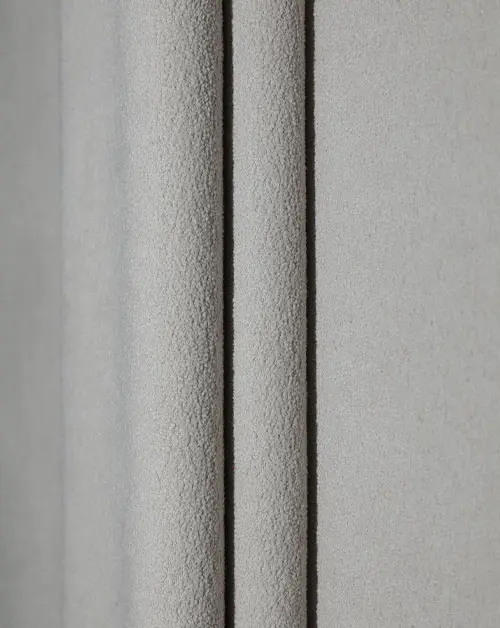
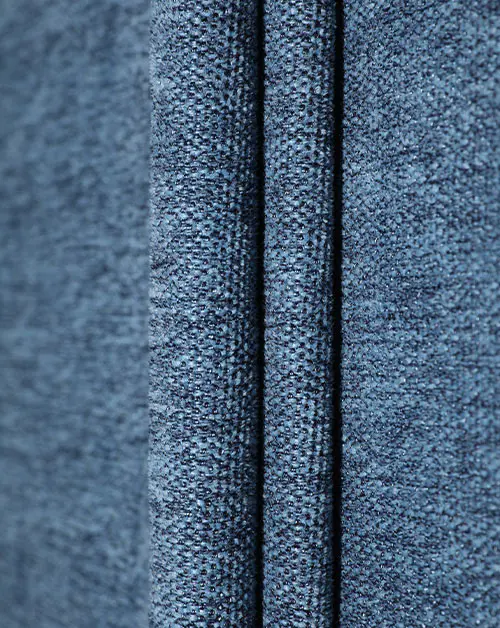
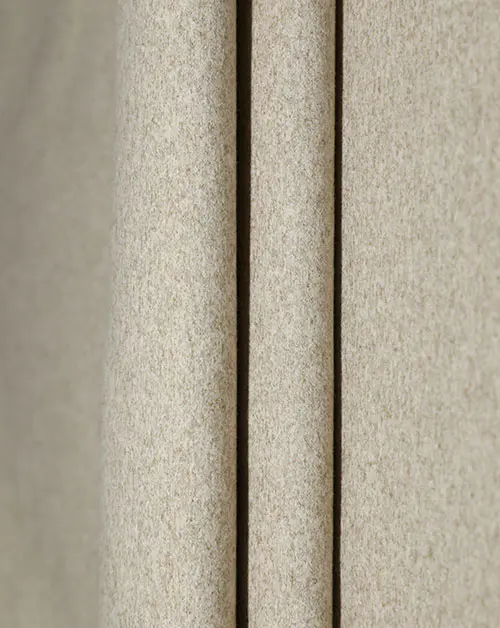
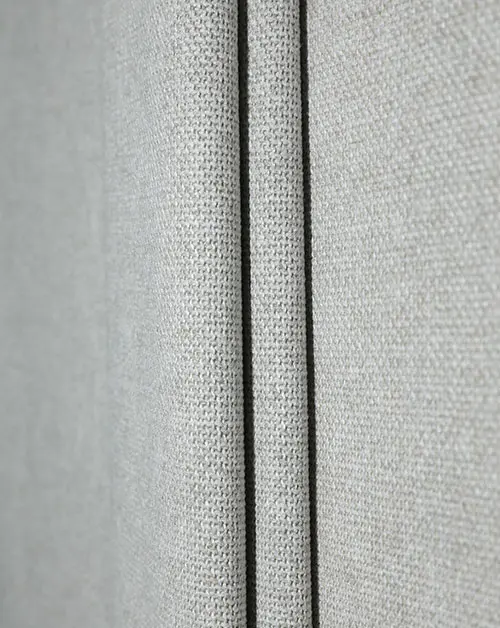
Gardinfor er et av de mest underspesifiserte elementene i produksjon og innkjøp av vindusbehandling. Kjøpere fokuserer på det dekorative ansiktsstoffet - dets mønster, tekstur, farge og vekt - og fôr blir behandlet som en ettertanke eller en kostnadslinje som skal minimeres. Dette fører til gardiner som henger ujevnt, falmer for tidlig, slipper inn mer lys enn tiltenkt, eller som ikke klarer å møte den termiske ytelsen som ansiktsstoffets utseende innebærer. Fôr er ikke dekorasjon; det er det funksjonelle laget som bestemmer hvordan den ferdige gardinen presterer, og spesifikasjonen bør være drevet av denne funksjonen i stedet for av prisen alene.
Denne veiledningen dekker hva gardinfôrstoffer faktisk gjør, hovedtypene som er tilgjengelige og deres spesifikke ytelsesprofiler, hvordan man matcher fôr til ansiktsstoffets vekt og påføring, og hva man skal se etter når man kjøper fôrstoff i volum.
Hva Gardinforing gjør
Et gardinfôr festet på baksiden av et ansiktsstoff tjener flere forskjellige funksjoner samtidig, og ulike fôrtyper prioriterer ulike funksjoner:
Lysstyring er den mest åpenbare funksjonen. Foringen reduserer mengden lys som sendes gjennom gardinen når den er lukket. Standard fôr reduserer lystransmisjonen merkbart; Blackout-fôr, med sitt lysblokkerende belegg eller tette vevde struktur, kan redusere lystransmisjonen til nesten null i midten av et godt tilpasset panel.
Termisk isolasjon er en annen funksjon. Luftspalten mellom fôret og stoffet, og fôrets egen termiske motstand, reduserer varmestrømmen gjennom vindusbehandlingen. Om vinteren holder en fôret gardin på betydelig mer romvarme enn en ufôret; om sommeren reflekterer en termisk eller mørklagt fôr solstråling før den kan varme opp rommet. Det termiske bidraget til en gardinforing er ikke trivielt i godt isolerte bygninger der vinduer er den primære kilden til varmetap.
Forbedring av kropp og drapering er en mindre diskutert, men praktisk talt viktig funksjon. Å feste et fôr til et ansiktsstoff gir vekt og stivhet til bunnen av gardinen, noe som forbedrer hvordan stoffet henger og hvor pålitelig det danner jevne folder eller folder. Mange lette eller middels vekt dekorative ansiktsstoffer – inkludert vevd lin-look polyester, jacquard stoffer og lett chenille – henger mye bedre med fôr enn uten, ganske enkelt fordi den kombinerte vekten gir en mer kontrollert drapering.
Beskyttelse av ansiktsstoff er den fjerde funksjonen. Fôret beskytter ansiktsstoffet mot UV-eksponering, støvansamling og fuktighet fra kondens ved vinduet. UV-eksponering fra direkte sollys kan falme nesten alle ansiktsstoffer innen få år; fôret absorberer UV som ellers ville angripe ansiktsstoffets fargestoffer og fiberstruktur. Denne beskyttelsen forlenger levetiden til kvalitets ansiktsstoffer betydelig, spesielt i solvendte rom.
Standard fôrstoff
Standard gardinfôr - noen ganger kalt hvitt bomullssatinfôr eller polybomullsfor - er et vanlig vevd eller satengvevd stoff, typisk 130–160 gsm, vanligvis i elfenben, hvitt eller ecru. Konstruksjonen er tett nok til å gi beskjeden lysreduksjon (reduserer i stedet for å blokkere lys) og tilstrekkelig ugjennomsiktighet for å forhindre silhuett av rominnholdet utenfra. Den tilfører gardinen fylde uten å vesentlig endre ansiktsstoffets draperingskarakter.
Standard fôr er det passende valget for rom der det er ønskelig med en viss lysreduksjon, men full mørklegging er ikke nødvendig - stuer, spisestuer, korridorer og dekorative gardiner hvis primære formål er estetisk snarere enn funksjonell. Det er den mest brukte foringstypen og standardspesifikasjonen når prosjektet ikke har noen spesifikke krav til lys, termisk eller akustisk ytelse utover den dekorative grunnlinjen.
Vekten på standardforet bør velges i forhold til ansiktsstoffet. Et lett ansiktsstoff (under 150 g/m2) er bedre tjent med et lettere standardfôr (130–140 g/m2) for å unngå å gjøre gardinen for tung for heading-tapen og for å bevare ansiktsstoffets draperingskarakter. Et tungt ansiktsstoff (250 gsm chenille eller kraftig jacquard) kan godta et tyngre fôr uten å bli uforholdsmessig stivt.
Blackout fôr
Mørkleggingsfôr er designet for å blokkere lysgjennomgang fullstendig når gardinen lukkes over vindusåpningen. Det er to konstruksjonstilnærminger for å oppnå blackout-ytelse: belagt blackout og vevd blackout.
Belagt blackout-fôr påfører ett eller flere lag med akryl- eller skumbelegg på baksiden av et basisstoff. Belegget fyller porene i den vevde strukturen som ellers ville transmittert lys. Basisstoffet er vanligvis en vanlig vevd polyester eller polybomull, og beleggsiden vender mot vinduet. Belagte mørkleggingsforinger er gradert etter deres lysblokkerende ytelse – basisbelagte foringer oppnår 75–90 % lysreduksjon; trippel-pass belagte foringer (tre belegglag) oppnår 99 % lysreduksjon, egnet for soverom, hjemmekinorom og applikasjoner som krever nesten fullstendig mørke i dagslys.
Vevd blackout-fôr oppnår lysblokkering gjennom en veldig tett vevd struktur - typisk en trelags sammensatt vev som produserer et stoff uten porerom som kan overføre lys - uten overflatebelegg. Vevd blending er generelt foretrukket for skreddersydde gardiner av høy kvalitet fordi fraværet av et belegg betyr at stoffet drapererer mer naturlig og beholder ytelsen gjennom vask uten risiko for delaminering av belegg over tid.
For soveromsgardiner, barnehagegardiner, hjemmekino- og mediarom og hotellrom er blendingsfôr standardspesifikasjonen. Den termiske isolasjonsfordelen med blackout-fôr er også høyere enn standard fôr fordi den tettere konstruksjonen og valgfrie belegg gir høyere termisk motstand.
Termisk fôr (bump / interlining)
Termisk fôr – også kalt interlining, bump fôr eller domette avhengig av konstruksjonen – er et tykt, luftig stoff som settes inn mellom ansiktsstoffet og standardfôret for å gi maksimal varmeisolasjon og betydelig ekstra vekt og kropp til gardinen. Interlining er laget av en løst vevd bomulls- eller polyesterstruktur med et høyt nivå av innestengt luft som gir termisk motstand som langt overgår standardfôr.
Interlinede gardiner har en karakteristisk fylde og substans – de henger med tunge, dype folder som holder formen nøyaktig, noe som er signaturen på skreddersydde vindusbehandlinger av høy kvalitet. Den ekstra vekten fra interlining forbedrer draperingen av ethvert ansiktsstoff dramatisk, noe som gjør at selv lette dekorative stoffer henger med den kontrollerte, strukturerte kvaliteten som vanligvis forbindes med tyngre materialer.
Den termiske ytelsen til interlinede gardiner er målbart bedre enn standardforede eller ufôrede gardiner for samme ansiktsstoff. I rom med store vinduer i klima med betydelig sesongmessige temperaturvariasjoner, bidrar interlinede gardiner meningsfullt til å redusere varme- og kjølebelastninger. Dette gjør interlining egnet ikke bare for førsteklasses dekorative applikasjoner, men for praktisk ytelse i godt isolerte bolig- og gjestfrihetsprosjekter.
Velge fôr etter bruk
| Søknad | Anbefalt fôrtype | Nøkkelkrav |
|---|---|---|
| Stue / dekorative gardiner | Standard bomullsateng eller polybomullsfôr | Kroppsforbedring, lysreduksjon, UV-beskyttelse for ansiktsstoff |
| Soverom - lette soveplasser | Blackout-fôr (trippel-pass belagt eller vevd blackout) | Nesten fullstendig lysblokkering; termisk isolasjon |
| Hotellgjesterom | Blackout fôr standard fôr (dobbelthengt eller lagdelt) | Fullstendig mørklegging for dagsovende; et uavhengig rent lag for personvern |
| Hjemmekino/medierom | Triple-pass blackout; mørk farget ansiktsstoff | Maksimal lyseliminering; akustisk absorpsjon sekundær fordel |
| Premium skreddersydd bolig | Interlining (bump/domette) standard fôr | Maksimal draperingskvalitet, fylde og termisk ytelse |
| Solvendte rom | Termisk/blackout fôr; UV-reflekterende belegg valgfritt | Solvarme avvisning; ansiktsstoff UV-beskyttelse |
| Lette, gjennomsiktige gardiner | Ingen fôr (fôr overvinner hensikten med renhet) | Lysspredning er renens funksjon; fôr ville blokkere det |
| Kontrakt/kommersiell (kontorer, gjestfrihet) | FR-behandlet standard eller blackout fôr | Brannhemmende sertifisering (EN 13773, BS 5867) kreves vanligvis |
Brannhemming i kontraktsforingsstoff
For kommersielle, gjestfrihets- og helsegardinapplikasjoner er brannhemming ikke valgfritt – det er et regulatorisk krav i de fleste markeder. Byggeforskrifter i Storbritannia, EU og de fleste utviklede markeder krever at gardiner i kommersielle og offentlige bygninger oppfyller brannhemmende standarder som begrenser stoffets bidrag til brannspredning og røykutvikling. I Storbritannia er BS 5867 Part 2 Type B (begrenset spredning av flamme) eller Type C (begrenset overflatespredning av flamme og begrenset varmeavgivelse) den vanlige kommersielle standarden; i EU gjelder EN 13773.
Brannhemming kan oppnås i fôrstoff gjennom iboende FR-fiber (iboende FR-polyester, modakryl eller behandlet viskose) eller gjennom kjemisk behandling av et konvensjonelt stoff. Iboende beholder FR-stoffer sin brannhemmende egenskaper permanent uavhengig av vask; kjemisk behandlede stoffer kan miste retardans ved gjentatte vaskesykluser, noe som kan være relevant for vaskbare kommersielle gardiner. For kontraktsspesifikasjoner må FR-sertifikatet samsvare med det faktiske stoffet i produksjon - ikke basisduken før behandling - og testrapporten skal gjenspeile den spesifikke konstruksjonen som leveres, ikke et tilsvarende eller lignende produkt.
Ofte stilte spørsmål
Må fôrstoffet matche vekten av ansiktsstoffet?
Ikke nødvendigvis matche, men være kompatibel. Det generelle prinsippet er at fôrvekten skal stå i forhold til stoffets vekt — et veldig lett fôr på et tungt stoff gir ujevn spenning på tvers av gardinens dybde, noe som fører til at stoffet forvrenges; et veldig tungt fôr på et lett ansiktsstoff dominerer draperingen og kan få gardinen til å henge stivt. For de fleste ansiktsstoffer i området 150–300 g/m2 er standardfor i området 130–160 g/m2 passende. For tunge ansiktsstoffer (300 g/m2, tykk chenille, kraftig jacquard) gir standard fôr i den øvre enden av vektområdet eller et litt tyngre stoff for spesialfor bedre balanse. Prøvetaking av kombinasjonen før skjæring av produksjonsmengder – kontroll av hvordan den forede gardinen henger og folder ved det tiltenkte plisseforholdet – bekrefter om vektbalansen er riktig før produksjonen foretas.
Kan blendingsfôr brukes på alle ansiktsstoffer?
Blackout-fôr kan festes til ethvert ansiktsstoff som er strukturelt i stand til å støtte den ekstra vekten og fôrets finishprosess. De praktiske hensynene er den kombinerte vekten av ansiktsstoff og blendingsfôr i forhold til gardinoverskriftstape og skinne- eller stangsystem (som må vurderes for total gardinvekt per meter), og om blendingsfôrets belagte overflate påvirker det ferdige gardinets utseende. Belagte blendingsfôr har en relativt stiv overflate som kan påvirke hvordan ansiktsstoffet draperes i forkantene og falden - spesielt for lette eller veldig draperte ansiktsstoffer. For luksusapplikasjoner med førsteklasses ansiktsstoffer, er vevd blendingsfôr (uten et belegglag) foretrukket fordi det drapererer mer naturlig og skaper mindre spenningsforskjell over gardinflaten.
Hva er forskjellen mellom gardinforing og gardininterlining?
Fôr er baksiden av gardinen – laget som er synlig fra vindussiden, som beskytter ansiktsstoffet og gir de lysblokkerende, termiske eller kroppsfunksjonene som er beskrevet i denne veiledningen. Interlining (bump, domette eller skredderfilt) er et tredje lag som legges inn mellom ansiktsstoffet og fôret. Dens formål er rent termisk og strukturell - for å legge til bulk og vekt som forbedrer draperingen og øker isolasjonen - og den er aldri synlig i den ferdige gardinen. En helforet gardin har tre lag: ansiktsstoff (synlig fra rommet) / interlining (skjult mellomlag) / foring (bakside, synlig fra vindussiden). Mellomfôret kan ikke brukes uten at et fôrlag dekker det, fordi mellomfôrets myke konstruksjon vil være synlig og vil fange opp støv hvis det blir eksponert som baksiden av gardinen.